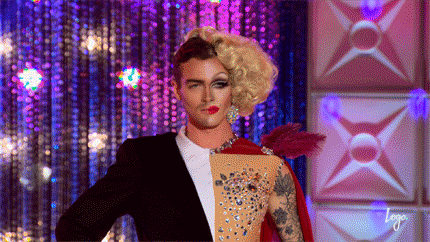
The show is something like the worlds toughest competition. Contestants, drag queens (men who dress as women), have to sing, dance, act, and construct their own outfits to compete for the title of America's Next Drag Superstar. This is done through numerous challenges that require comedy, camp, and a quick wit. This show is important because, as gay men dressing as women and embodying gender ambiguity, the show demonstrates a flippancy towards gender construction. The comedy is achieved through the recognition of gender stereotyping, heteronormativity, and gender performance. The show itself is very comfortable with poking fun at societies constructs and what is considered a norm. With contestants often winning for thinking outside of the box, transformative ideas that push boundaries are often prided and rewarded, making going against the grain of society commendable. What's rather interesting about this show is that it explores sexual othering in a new way. Rather than stigmatizing homosexuality, RuPaul's Drag Race does the reverse and stigmatizes heterosexuality, almost completely ignoring it in the show, or poking fun at it.
To touch back on what I mentioned earlier, what makes this show so incredible can also be it's downfall. Yes, any and all exposure of the LGBTQ community is good, but the loss of bisexual acknowledgment or any lesbian representation can be damaging to the already oppressed sexual deviations. It's interesting to approach this with a feminist perspective: should we be surprised that there is homosexual male representation and no lesbian representation? Have women been pushed into the back seat of LGBTQ representation in media? It's sad to recognize that sex discrimination still plays such a major roll in a progressive show, but it's important to make these distinctions so that even more progress can be made. Hopefully, the next thing we seen in media that boasts LGBTQ visibility is something like drag kings competing.

I think you bring up a a good point about visibility of males in the lgbtq versus females, which I hadn't thought about. Off the top of my head I can hardly think of any think of any examples of lesbians in media other than Ellen. However, I still would agree that RuPaul's drag race is a very important and culturally significant show. Anecdotally, basically all the (out) gay and trans/non-binary people I know are huge fans of the show and it seems really important to them as well.
ReplyDeleteI definitely agree with what you mention about representation in the show but I also have to agree with Aaron. Even though, yes, there isn't enough representation of bisexual and lesbian (and many other more) people in the show, I think it's still an important show for the community. Like Aaron said, most LGBTQ+ people I know are fans of the show, even though the main characters and the main target demographic are gay men. Just like you, I hope that in the future we get more shows where we can see drag kings and other representations of non-gender binary people and other people in the community.
ReplyDeleteI don't know if this is the case in other countries. There are very few gay men in China who speak for lesbians. On the contrary, lesbians are not only talking about gay rights, but also shouldering the responsibility of feminism. It is strange that many straight girls choose to speak for them because they like to see two boys fall in love.
ReplyDeleteYou're right to say that the media doesn't portray gay woman nearly as much as it portrays gay men. I have never seen RuPaul's drag race but it sounds interesting and I will definitely check it out.
ReplyDelete